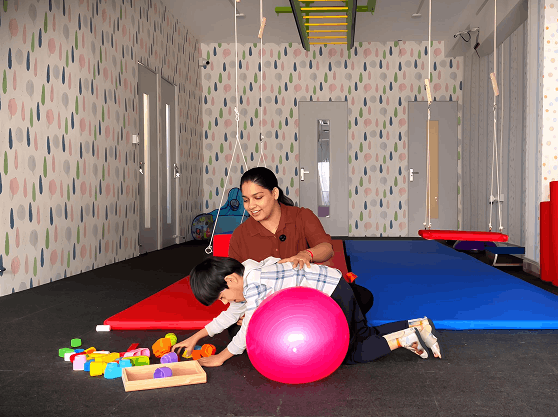
Occupational therapy helps your child build motor skills, manage sensory challenges, and handle daily tasks more independently. It works across conditions like autism, ADHD, sensory processing disorder, and developmental delays.
Your child can get professional therapy at a certified OT centre, and that is where the biggest progress happens. Home activities support those sessions, but they do not replace them. Before starting, get your child assessed by an occupational therapist and check in with your doctor. The right exercises depend on your child’s needs, not a one-size-fits-all list.
This guide gives you a practical starting point, simple activities recommended by therapists that any parent can do at home, with no special equipment needed.
Key Takeaways
- OT helps children with autism, ADHD, cerebral palsy, Down syndrome, developmental delays, SPD, and DCD
- Home activities support clinic sessions — they do not replace them
- Always get your child assessed before starting any home programme
- Keep your doctor informed, especially for complex medical conditions
- 10 to 20 minutes of daily practice is more effective than long, occasional sessions
- Match activities to your child’s age and developmental stage
- Early intervention, before age 5, gives the best results
- Your observations at home help therapists refine your child’s programme
When Does Your Child Need Home Occupational Therapy?
Children need home occupational therapy when dealing with conditions like autism, ADHD, sensory processing disorder, cerebral palsy, or developmental delays; either as a focused push to improve a specific condition or as a support alongside speech therapy or physiotherapy. But OT is not only for special children.
If your child is developing normally, home OT exercises can still sharpen their focus, improve coordination, and give them a strong head start before school kicks in.
Not sure where your child stands? We offer a free assessment to catch any hidden developmental gaps early because early action always makes the biggest difference.
In Which Conditions Is Home Occupational Therapy Helpful?
Occupational therapy works across a wide range of conditions. Whether your child has a diagnosed condition or is simply showing signs of developmental difficulty, OT at home can be adapted to meet exactly where your child is and work from there.
Cerebral Palsy
Cerebral palsy affects your child’s movement, muscle tone, and posture due to brain damage before, during, or shortly after birth. Your child may have weak muscles, poor coordination, or trouble with hand tasks like holding a pencil or eating. Home OT helps build the strength and coordination needed to manage daily tasks at their own pace.
Autism Spectrum Disorder (ASD)
Autism affects how your child communicates, processes information, and interacts with the world. They may struggle with social situations, eye contact, sensory experiences, or changes in routine. No two children with autism are the same. Home OT helps manage sensory responses and build daily skills needed for school and social life.
Developmental Delays
Developmental delays happen when your child takes longer than expected to reach milestones like sitting, walking, or talking. This can be due to premature birth, nutritional gaps, or lack of early stimulation. Home OT works on the specific areas your child is falling behind and builds a strong foundation for everyday life.
Down Syndrome
Down syndrome is caused by an extra chromosome 21, often presenting with lower muscle tone and slower motor development. Fine hand tasks like writing, using scissors, or fastening buttons can be more challenging for your child. Home OT focuses on improving hand function and building independence in daily tasks.
ADHD
ADHD makes it genuinely hard for your child to sit still, stay focused, and stay organised; not because they are difficult, but because their brain works differently. Over time, repeated struggles can quietly affect their confidence. Home OT helps build practical strategies to focus, plan, and handle daily tasks more smoothly.
Developmental Coordination Disorder (DCD)
DCD, sometimes called dyspraxia, is when your child struggles with coordination and motor tasks despite no underlying muscle condition. Catching a ball, riding a bike, or writing neatly can feel unexpectedly hard. Home OT works on coordination, balance, and motor planning to make everyday tasks gradually easier.
Occupational Therapy Exercises for Special Conditions
Home OT Therapies for Cerebral palsy
Daily home OT exercises help your child with cerebral palsy build strength, improve hand control, and gain independence in everyday tasks.
| Exercise / Activity | Description |
| Finger Clenching & Extension | Make a fist, hold 3 seconds, then spread fingers wide. Repeat 10 times to reduce spasticity and improve hand opening. |
| Wrist Rotations | Stabilize the child’s forearm and gently rotate the hand in circles, both clockwise and counterclockwise, to maintain wrist flexibility. |
| Coin Drop into Piggy Bank | Drop coins into a slot; simultaneously strengthens grip, pinch, and finger control. |
| Squeeze Toy / Squirt Gun Play | Squeeze a small rubber toy or squirt gun to build hand strength and voluntary grip release. |
| Stringing Large Beads | Thread large beads or pasta onto a string to improve finger dexterity and hand-eye coordination. |
| Lego Pull-Apart | Pull Duplo/Lego blocks apart with both hands ; forces bilateral motor control and grip strength. |
| Rolling Pin on Playdough | Roll playdough with both hands flat on a surface; trains simultaneous bilateral arm use and shoulder stability. |
| Rolling a Toy Car | Push a toy car using both hands in a coordinated push-pull pattern to build bilateral coordination. |
| Drumming on Surfaces | Beat on a drum or table in alternating or simultaneous patterns; builds rhythm and bilateral motor planning. |
| Prone Reading (Tummy Time) | Child lies on stomach to read or do puzzles; activates core, shoulder, and neck muscles. |
| Crawling Over Cushions | Crawl over an uneven cushion/pillow surface; builds core strength and shoulder stability. |
| Kneeling Catch | Child kneels and catches a soft ball; engages core and hip stabilizers while in kneeling position. |
| Pouring Water from Pitcher to Cup | Trains controlled upper limb movement, grip, and wrist stability through a functional daily task. |
| Passive Range of Motion (Caregiver-led) | Caregiver gently moves child’s elbows, shoulders, ankles, and fingers through their full range; never force past resistance. |
| Figure-Eight Streamers | Child moves a ribbon in a figure-eight pattern across the body; trains cross-midline coordination. |
| Target Throwing | Place targets to the left and right; child throws to the opposite side to train cross-midline movement. |
| Drawing and Tracing | Use dot-to-dot or large tracing sheets to build hand-eye coordination through drawing. |
| Sequencing Games | Practice multi-step tasks like making a sandwich or sorting objects to build planning and executive function. |
| Dressing Practice Board | Board fitted with buttons, zippers, velcro, and snaps for daily ADL fastener practice. |
| Visual Schedule | Picture-based checklist for morning routine; builds independence and task-initiation skills. |
Important: Some exercises here, especially passive range of motion movements, should only be done after guidance from a certified therapist. Wrong technique can increase muscle tightness or hurt the joints. If your child has significant spasticity or uses assistive equipment, get your doctor’s clearance first.
Home OT Therapies for Autism spectrum disorder
Home OT helps your child with autism manage sensory challenges, build daily routines, and develop independence in everyday life.
| Exercise / Activity | Description |
| Sensory Bin Exploration | Fill a bin with rice, beans, or kinetic sand; hide small toys inside for the child to find; builds tactile tolerance gradually. |
| Weighted Sensory Bottle | Sealed bottle with colored water and small objects; child rolls and tilts it; provides proprioceptive and calming visual input. |
| Blanket Burrito / Sandwich | Wrap the child snugly in a blanket and apply gentle even pressure; delivers deep pressure input that calms an overaroused nervous system. |
| Swinging or Rocking | Rhythmic vestibular input via a swing or rocking chair improves body awareness and self-regulation. |
| Joint Compression | Gently press down on the child’s shoulders or push palms together; provides grounding proprioceptive feedback. |
| Mini Trampoline Jumping | Bouncing provides vestibular and proprioceptive input, helping regulate arousal and attention. |
| Animal Walks | Bear walks, crab walks, and frog hops build gross motor coordination and provide heavy work input the nervous system needs. |
| Wall Push-Ups | Child stands arm’s length from a wall and pushes; builds upper body strength and grounding proprioceptive input. |
| Living Room Obstacle Course | Crawl under chairs, jump over rolled towels, balance on cushions; improves motor planning, coordination, and body awareness. |
| Playdough Play | Rolling, squishing, and pinching playdough strengthens intrinsic hand muscles and is sensory-regulating. |
| Clothespin Game | Clip clothespins onto a bowl edge to build finger pinch strength and tripod grip needed for writing. |
| Puzzle Solving | Inset puzzles build problem-solving, hand-eye coordination, and tolerance for task completion; increase difficulty gradually. |
| Bead Threading | Thread large beads or pasta onto string; improves pincer grip and bilateral hand use. |
| Dressing Practice | Practice one fastener type at a time (velcro → buttons → zippers) with extra time given in the morning. |
| Kitchen Involvement | Stirring batter, washing vegetables, and kneading dough build hand strength and bilateral coordination in a meaningful context. |
| Bubble Blowing | Strengthens oral-motor muscles, improves visual tracking, and encourages gross motor movement as the child chases bubbles. |
| Dance Party | Free movement to music builds motor coordination, rhythm processing, and emotional expression. |
| Yoga Poses | Simple poses like downward dog or tree pose improve body awareness, balance, and self-regulation. |
Home OT Therapies for Developmental delays
Home OT helps your child with developmental delays build motor skills, attention, and daily independence; one milestone at a time.
| Exercise / Activity | Description |
| Log Rolling | Child lies straight and rolls the full length of a mat; builds vestibular processing, bilateral coordination, and core strength. |
| Bear Crawling | Crawl on hands and feet with knees off the floor; builds shoulder girdle stability and cross-lateral coordination. |
| Obstacle Course | Crawl through chairs, jump over a rolled towel, balance on a taped line; targets motor planning and spatial awareness. |
| Balance Board / Cushion Standing | Stand on a folded blanket or balance board; trains postural control and proprioception. |
| Trampoline Jumping | Builds bilateral leg coordination, core activation, and vestibular tolerance in a motivating way. |
| Playdough Shaping | Roll, pinch, and press playdough into shapes; activates intrinsic hand muscles and tactile processing. |
| Therapy Putty / Resistance Band | Squeeze putty or stretch a Theraband to strengthen hand and finger muscles that underpin writing and dressing. |
| Lacing Cards | Thread a lace through holes in a stiff card; trains pincer grip, bilateral hand use, and visual-motor integration. |
| Clothespin and Tong Transfer | Use tongs to move pom-poms between bowls or clothespins to sort items; targets tripod grip and hand precision. |
| Stacking and Sorting | Stack cups and sort blocks by color or shape; develops bilateral coordination, sustained attention, and cognitive-motor integration. |
| Finger Painting | Direct contact with paint or shaving cream on a tray builds tactile tolerance gradually for touch-sensitive children. |
| Bath Time Sensory Play | Pouring between cups and squeezing sponges builds tactile awareness and bilateral hand use during a natural daily routine. |
| Sand / Rice Bin Digging | Scoop and hide objects in sensory bins to build fine motor precision and sensory tolerance. |
| Spoon and Cup Practice | Use thick-handled spoons and weighted cups to improve grip and self-feeding skills. |
| Dressing Board | A board with velcro, buttons, snaps, and zippers allows repetitive ADL practice without time pressure. |
| Chore Integration | Sorting laundry, folding towels, and carrying light groceries develop motor strength, sequencing, and independence. |
| Movement Breaks | Short bursts of jumping jacks, animal walks, or trampoline every 20–30 minutes to maintain attention and regulate energy. |
Home OT Therapies for Down syndrome
Home OT helps your child with Down syndrome strengthen hand muscles, improve coordination, and build independence in daily self-care tasks.
| Exercise / Activity | Description |
| Ball Shape Hold | Child lies on back, pulls knees to chest, wraps arms around knees, and lifts head; hold up to 20 seconds. Targets deep core flexors. |
| Bird Dog | On hands and knees, extend one arm and opposite leg simultaneously; hold 20 seconds, switch sides. Targets back and core extensors. |
| Table Top Bridge | Sit with hands behind, feet flat, knees bent; lift bottom to form a table shape. Builds core and hip extensors. |
| Gym Ball Leg Transfers | Lie on back with feet on a gym ball or pillow pressed to the wall; move it up-down and side-to-side. Targets deep core control. |
| Glute Bridge with Straight Leg | Lie on back, knees bent, one leg raised; lift the bottom while slowly lowering the raised leg. Builds hip and core stability. |
| Wheelbarrow Walking | Adult holds child’s ankles; child walks on hands; builds shoulder, arm, and core strength simultaneously. |
| Wall Push-Ups | Child pushes off the wall with both hands; builds shoulder stability and bilateral coordination. |
| TheraBand Pulls | Stretch elastic bands outward with both hands; builds shoulder external rotators and scapular stabilizers. |
| Pushing a Trolley / Laundry Basket | Pushing a loaded basket provides heavy proprioceptive input to shoulders and core within a functional task. |
| Art Activities (Tearing, Cutting, Dabbing) | Tearing paper strips, using adapted scissors, and paint dabbing all work finger isolation and hand strength. |
| Rubber Band Stretching | Stretch rubber bands over cups or pegboards; builds finger strength and pinch grip. |
| Foam Squeezing / TheraBand Squeeze | Squeeze foam shapes or stretch Theraband to improve hand awareness and grip strength. |
| Tongs and Tweezers Transfer | Use tongs to move objects between containers; targets finger precision and tripod grip directly. |
| Pegboards and Puzzles | Insert and remove pegs or puzzle pieces; develops pincer grasp, visual-motor integration, and hand-eye coordination. |
| Sandwich Stacking | Child stacks sandwich layers in sequence; builds bilateral coordination and task sequencing skills. |
| Trampoline Jumping | Builds bilateral leg coordination, core activation, and vestibular processing. |
| Balance Beam Walking | Walk along a low beam or taped line; builds ankle stability and postural control. |
| Therapy Ball Exercises | Sit on a therapy ball and bounce gently or reach side-to-side; activates core and develops balance reactions. |
| Target-Based Games | Throw beanbags into a hoop or kick a ball to a target; combines motor planning, bilateral coordination, and visual-motor skills. |
| Obstacle / Maze Course | Set up at-home obstacle paths to challenge directional movement, midline crossing, and motor planning. |
| ADL Practice Board | Board with zippers, velcro, buckles, and buttons to rehearse dressing and grooming in a non-rushed setting. |
| Proprioceptive Input Before Tasks | Do joint compression or wall push-ups before fine motor activities to wake up joints and improve motor readiness. |
| Water Play and Foam Squeezing | Squeeze sponges during bath time; builds hand strength while keeping the activity fun and routine-integrated. |
Important: Some children with Down syndrome have a condition called atlantoaxial instability, where the upper neck joints are less stable than usual. Before doing any exercises involving the neck, jumping, or head and neck weight-bearing, please check with your child’s doctor first. A simple medical check can confirm whether these exercises are safe for your child.
Home OT Therapies for ADHD
Home OT helps your child with ADHD build focus, impulse control, and organisation through structured daily activities and consistent routines.
| Exercise / Activity | Description |
| Wall Push-Ups | Child stands arm’s length from the wall and pushes for 10–20 reps. Provides proprioceptive input that calms the nervous system within 60–90 seconds before a task. |
| Chair Push-Ups | Child sits in a chair, places palms on the seat, and pushes their body up. Grounds and organizes the nervous system; ideal before homework or study time. |
| Tug of War | Child pulls one end of a rope against a caregiver. Provides heavy proprioceptive and vestibular input that improves physical strength and self-regulation. |
| Animal Walks | Bear walk, crab walk, frog jumps, and inchworm walk across the room. Heavy work activities that enhance motor reflexes and burn off excess energy. |
| Balance Beam Walking | Walk along a taped line or low balance beam on the floor. Builds postural control, focus, and bilateral coordination simultaneously. |
| Theraband Row Exercise | Tie a Theraband to a doorknob; child sits and pulls both ends while singing ‘Row Row Row Your Boat.’ Provides calming heavy input; ideal before homework. |
| Little Helper (Heavy Work Chores) | Carry laundry baskets, push grocery carts, wipe tables, or shovel sand. Heavy work should feel effortful but not exhausting; calms and focuses the child. |
| Playdough Workout | Squeeze, roll, and shape playdough for 5–10 minutes. Strengthens hand stability, motor skills, and provides tactile regulation. |
| Spray Bottle Activities | Use a spray bottle to water plants or wash windows. Builds hand strength needed for pencil grip and provides proprioceptive input to fingers. |
| Clothespin Sorting | Use clothespins to pick up objects, match colors, or clip onto a line. Improves finger pinch strength and coordination while building sustained attention. |
| Bead or Sticker Lines | Thread beads or place stickers along drawn lines. Builds fine motor precision and trains the child to sustain attention on a structured close-up task. |
| Mini Trampoline Jumping | 5–10 minutes of bouncing before seated work. Vestibular and proprioceptive input significantly improves on-task behavior and focus in ADHD children. |
| Obstacle Course | Set up a home course with crawling, jumping, and balancing. Motor planning challenges force sustained attention and sequential thinking. |
| Yoga Poses | Simple poses like tree, warrior, and child’s pose. Improves body awareness, self-regulation, and concentration; especially for attention and sensory issues. |
| Resistance Band Pulls | Pull resistance bands with both hands. Strengthens upper body, improves motor planning, and builds focus through effortful physical engagement. |
| Visual Schedule / Routine Chart | Picture-based step-by-step morning or evening routine chart. Reduces transition meltdowns, builds independence, and compensates for working memory gaps. |
| Timer-Based Tasks | Use a visual sand timer for 5–10 minute focused activity blocks. Teaches time awareness and trains the child to sustain attention in structured bursts. |
| Sorting and Categorizing Games | Sort objects by color, size, or type into containers. Builds executive function; planning, working memory, and cognitive flexibility. |
| Ball Catching and Throwing | Play catch with progressively smaller balls. Improves hand-eye coordination, impulse control, and bilateral coordination. |
| Handwriting Practice (Vertical Surface) | Write or draw on paper taped to a wall. Writing on a vertical surface builds shoulder stability, wrist extension, and core engagement; all weak in ADHD kids. |
Home OT Therapies for Sensory Processing Disorder
Home OT helps your child manage sensory sensitivities, reduce overreactions to touch, sound, or movement, and feel more comfortable in daily environments.
| Exercise / Activity | Description |
| Sensory Bin Exploration | Fill a bin with rice, water beads, sand, or beans. Child explores freely; builds tactile awareness and tolerance to different textures gradually. |
| Texture Scavenger Hunt | Hide objects of different textures (smooth, rough, squishy) around the room. Child finds and identifies each; desensitizes tactile hypersensitivity. |
| Bumpy Playdough Making | Mix rice, seeds, or sand into homemade playdough for varied texture. Child kneads and shapes it; teaches direction-following and tactile regulation. |
| Finger Painting / Shaving Cream Play | Paint with fingers or draw in shaving cream spread on a tray. Direct skin contact builds tactile tolerance and supports visual-motor integration. |
| Swinging | Gentle rhythmic swinging (linear motion) on a garden swing or indoor swing. Provides vestibular input that calms an overaroused sensory system. |
| Spinning (Controlled) | Slowly spin child in an office chair or on a sit-and-spin toy; 10 rotations maximum. Alerts an underaroused vestibular system; always monitor for dizziness. |
| Trampoline Jumping | Jumping provides combined vestibular and proprioceptive input. Calming or alerting depending on the child’s sensory profile. |
| Rolling Down a Hill / Incline Mat | Rolling provides vestibular, tactile, and proprioceptive input simultaneously; one of the most full-body regulating activities available. |
| Animal Walks (Heavy Work) | Bear walks, crab walks, and wheelbarrow walking. Proprioceptive ‘heavy work’ is the most effective tool for sensory regulation across all SPD profiles. |
| Tug of War | Pull a rope or resistance band against a caregiver. Provides deep proprioceptive input to joints and muscles; regulating for both over and under-responsive children. |
| Weighted Blanket / Lap Pad | Place a weighted blanket or lap pad on the child during seated activities. Provides constant deep pressure proprioceptive input that reduces sensory-seeking behavior. |
| Blanket Burrito / Sandwich Press | Wrap child snugly in a blanket or gently press between two sofa cushions. Deep pressure calms an overaroused nervous system within minutes. |
| Joint Compression | Gently press down on child’s shoulders, push wrists together, or compress knees toward the hips. Provides grounding proprioceptive input before demanding tasks. |
| Bead Stringing / Pasta Threading | Thread beads or pasta onto string. Improves visual tracking, fine motor precision, and tactile discrimination. |
| Shadow Puppets | Use hands or cut-out shapes to make shadows on a wall. Improves visual processing and directs focused visual attention. |
| Rhythm Clapping / Tapping to Music | Clap or tap rhythm patterns to music. Builds auditory processing, bilateral coordination, and sequencing. |
| Listening to Nature Sounds | Use calming nature soundscapes (rain, ocean, forest) during transitions or before sleep. Helps auditory-sensitive children modulate their response to environmental sounds. |
| Obstacle Course | Combine crawling, jumping, balancing, and squeezing through tight spaces. Multi-sensory input in a controlled, predictable sequence builds sensory tolerance and motor planning. |
| Clay / Kinetic Sand Play | Squeezing, molding, and pulling clay or kinetic sand. Targets tactile discrimination and hand strength while being deeply regulating for most SPD children. |
| Sponge Squeezing in Water Play | Squeeze sponges in a water basin, transferring water between containers. Bilateral hand use, tactile tolerance, and proprioceptive input combined. |
Home OT Therapies for Developmental Coordination Disorder
Home OT helps your child with DCD improve coordination, balance, and motor planning making everyday physical tasks gradually easier and less frustrating.
| Exercise / Activity | Description |
| Catching a Balloon | Practice catching a slowly floating balloon before progressing to a ball. The slower movement gives more time to plan the catch; ideal motor planning starter. |
| Target Throwing (Beanbags) | Throw beanbags into a hoop or bucket placed at varying distances. Builds motor planning, eye-hand coordination, and force modulation. |
| Kicking a Stationary Ball | Place a ball still on the floor; child kicks it toward a target. Starts with stationary to reduce motor planning demand before progressing to moving ball. |
| Jumping Jacks (Modified) | Start with feet only (jump feet apart-together), then add arms once legs are mastered. Breaking down the bilateral movement sequence reduces motor planning overload. |
| Hopscotch | Draw a hopscotch grid on the floor with tape. Single-leg hopping and sequencing of jumps build balance, bilateral coordination, and motor sequencing skills. |
| Balance Beam Walking | Walk along a low balance beam or taped floor line, forward then backward. Builds ankle stability, postural control, and motor planning. |
| Single-Leg Standing | Stand on one leg, aiming to hold for 5–10 seconds. Progress to eyes-closed or standing on a folded blanket. Builds balance reactions and proprioception. |
| Obstacle Course (Step-by-Step) | Build a simple 3–4 step course and teach each element separately before combining. DCD children need tasks broken into small steps to reduce motor planning overload. |
| Wheelbarrow Walking | Adult holds child’s ankles while the child walks on hands. Builds shoulder stability, core strength, and motor coordination. |
| Crawling through Tunnels | Crawl through a play tunnel or under a row of chairs. Builds cross-lateral coordination, spatial awareness, and proprioceptive body-position sense. |
| Precision Pinching with Small Objects | Pick up small objects (buttons, coins, raisins) and place into a small container. Builds finger precision, tripod grip, and hand-eye coordination; critical for writing. |
| Clothespin Clips | Clip clothespins onto a bowl or container edge. Targets the pinch-release mechanism and finger isolation needed for scissors, pencils, and buttons. |
| Cutting Practice with Scissors | Cut along straight lines, then curved lines, then shapes. Start with thicker paper or foam sheets. Builds bilateral hand coordination and tool use. |
| Lacing and Threading | Thread laces through large-hole cards or lace shoes. Develops bilateral hand coordination, motor sequencing, and finger precision. |
| Handwriting on Vertical Surface | Tape paper to a wall at eye level; child writes or traces. Vertical surface improves wrist extension, shoulder stability, and letter formation in DCD children. |
| Button and Zipper Practice | Practice on a dressing board with real-sized buttons, zippers, and snaps. Directly addresses ADL difficulty that is the primary daily challenge in DCD. |
| Stacking Blocks / Jenga | Stack blocks or play Jenga. Requires controlled, graded hand force and precision; both severely weak in DCD children. |
| Rolling Pin on Playdough | Roll playdough flat using both hands on a rolling pin. Trains coordinated bilateral upper limb use and graded force control. |
| Spoon and Ball Transfer | Balance a small ball on a spoon and walk without dropping it. Builds wrist stability, postural control, and slow deliberate motor control. |
| Task Sequencing Practice | Break daily tasks (brushing teeth, packing a bag) into numbered picture steps. DCD children struggle with motor sequencing; visual cues reduce cognitive motor load. |
| Rhythm and Clapping Games | Clap rhythmic patterns (slow to complex) or copy drum beats. Builds timing, sequencing, and bilateral motor coordination that underpin all coordinated movement. |
Age wise Occupational Therapy Exercises
Occupational therapy exercises are most effective when matched to your child’s age and developmental stage. Here is a simple breakdown of the right activities for every stage of your child’s growth.
0-1 years (Infancy)
| Cognitive Development | Daily Living Skills | Fine Motor Skills | Gross Motor Skills | Sensory Play |
| Peek-a-boo | Holding bottle | Grasping toys | Tummy time | Tactile play with soft toys |
| Responding to sounds | Opening mouth for spoon | Reaching for objects | Rolling over | Visual tracking with mobiles |
1-3 years (Toddler)
| Cognitive Development | Daily Living Skills | Fine Motor Skills | Gross Motor Skills | Sensory Play |
| Sorting objects by color or shape | Brushing teeth | Using tweezers to pick up small objects | Jumping on a trampoline | Playing with playdough |
| Simple board games | Using utensils during meals | Drawing and coloring | Playing hopscotch | Water play with cups and funnels |
3-5 years (Preschool)
| Cognitive Development | Daily Living Skills | Fine Motor Skills | Gross Motor Skills | Sensory Play |
| Puzzles | Dressing and undressing | Beading necklaces | Crawling through tunnels | Sand play |
| Memory matching games | Folding clothes | Cutting shapes with scissors | Dancing to music | Finger painting |
| Lacing cards |
5-7 years (Early School Age)
| Cognitive Development | Daily Living Skills | Fine Motor Skills | Gross Motor Skills | Sensory Play |
| Building with blocks | Tying shoelaces | Writing letters | Climbing playground equipment | Exploring sensory bins |
| Following multi-step directions | Packing school bag | Using a ruler | Skipping rope | Texture exploration |
7+ years (Older Children)
| Cognitive Development | Daily Living Skills | Fine Motor Skills | Gross Motor Skills | Sensory Play |
| Strategy board games | Making simple meals | Origami | Organized sports | Cooking with textures |
| Planning daily schedule | Managing personal hygiene | Sewing simple patterns | Bike riding | Gardening |
Conclusion
Occupational therapy at home is not complicated. It just needs to be consistent. The activities in this guide are designed to fit into your child’s daily routine without adding stress to yours.
You do not need to do everything at once. Start with one or two activities, stay consistent, and trust the process. Every bit of practice you do at home strengthens what your child is building in their therapy sessions.
That said, home activities work best when they are backed by a proper therapy plan. If your child has not yet been assessed, that is the most important first step. The right activities depend on your child’s specific needs, and a certified occupational therapist is the best person to guide that. Keep your doctor in the loop too, especially if your child has a medical condition.
As you go, keep a simple note of what your child responds well to and what causes distress. Share this with your therapist at every session. Your observations at home are some of the most useful information your therapist can work with.
If you are in the NCR region and looking for professional support, our occupational therapist in Noida can assess your child, build a home programme tailored to their needs, and guide you at every step so you always know what to practise and why.
Disclaimer: This article is for informational purposes only. The exercises and activities shared here are general recommendations and are not a substitute for professional medical advice, diagnosis, or therapy. Always consult your child’s doctor and a certified occupational therapist before starting any home therapy programme. Every child is different, and what works for one child may not be suitable for another.