
Online Therapy & Care for Special Children
Finding the right support for your special child does not have to be hard. HireForCare provides certified assessments and therapies for children with Autism, ADHD and Cerebral Palsy, including Speech, Occupational, ABA and Special Education therapies. Available online from home and in-person, serving families across India.
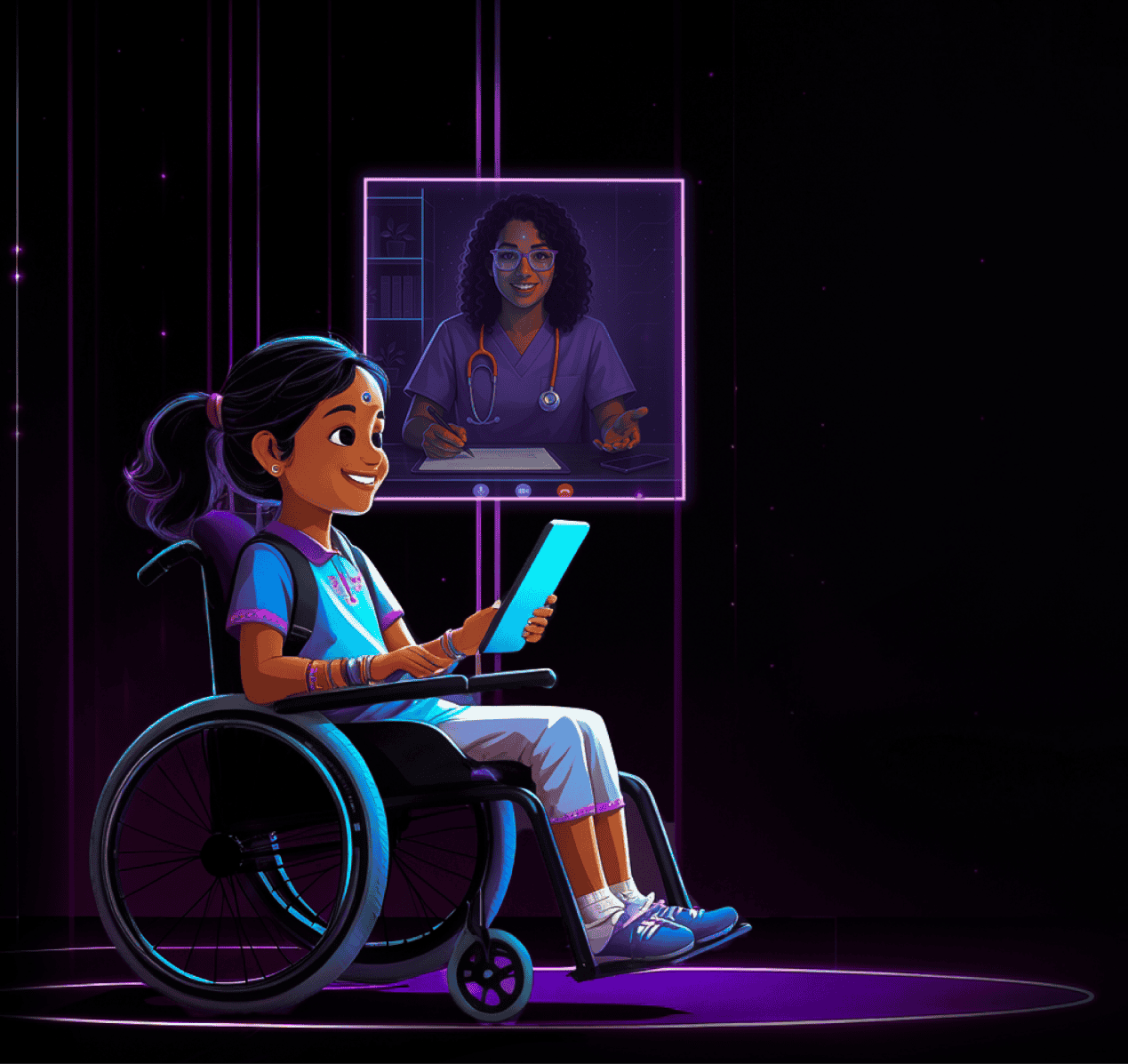
As a parent, spotting early signs of developmental delays in your child can be confusing and overwhelming. Our AI-powered Early Screening Tool helps you understand your child's current development status quickly and clearly from the comfort of your home
Quick 15-min Screening: Simple questions you can answer from homeSpot Early Signs: Identify early indicators of developmental delaysAI Powered Insights: Get a clear picture of your child's development status instantlyPersonalized Next Steps: Consult our specialists online or in-person, whenever you are ready

Discover our innovative digital platform that connects children with certified therapists through secure, interactive sessions designed for optimal learning and development.

▶ Click to Watch Online Therapy DemoWatch Demo
Watch how our innovative online therapy platform creates engaging, interactive sessions that help children learn and develop from the comfort of their home.
Everything your special child needs, all in one place.
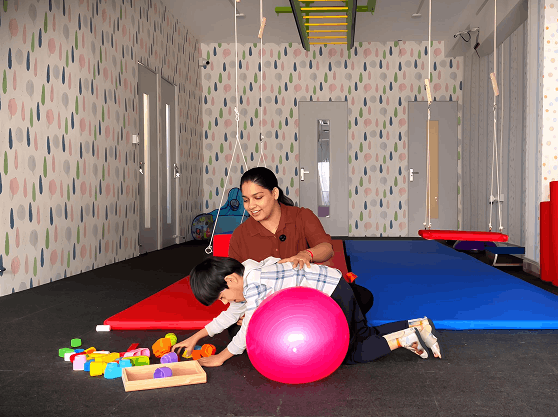
Helps your child build motor skills, improve coordination and manage daily activities with greater independence.

Supports children in developing communication skills, improving speech clarity and overcoming language delays.

Uses evidence-based techniques to encourage positive behaviours and reduce challenges in children with Autism and ADHD.

Personalised learning support designed to help your child progress academically at their own pace and potential.
We understand how important it is to trust the person working with your child. Every therapist on our team is certified, background-verified and experienced in supporting children with special needs.







Driven by experience, guided by empathy - meet the people who built HireForCare from the ground up.

Ram brings 14+ years of experience across corporate and startup environments, with expertise in technology, product systems and digital strategy. At HireForCare, he leads the platform and product side with a focus on building reliable, accessible solutions for families of children with special needs.
LinkedIn
Rajat brings 13+ years of experience in business growth, customer strategy and revenue leadership, along with an engineering background and an MBA from IIM Mumbai. His personal journey as a parent of a child with special needs helped shape HireForCare's purpose and deepened its understanding of what families truly need.
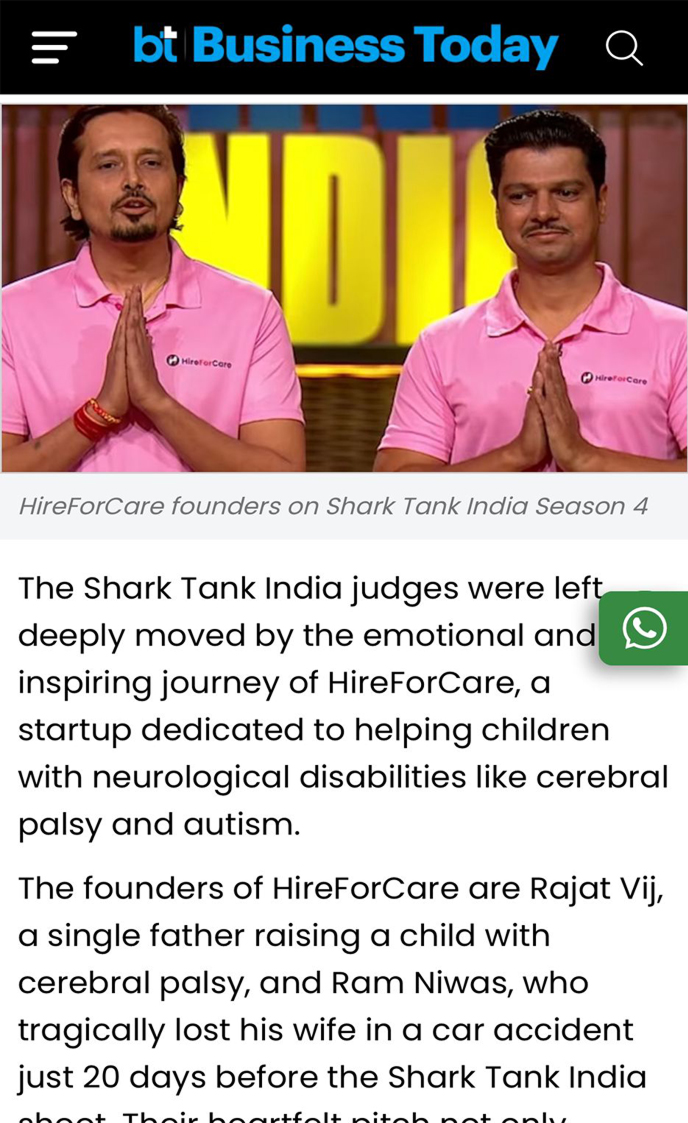
LinkedInFeatured in leading publications and media outlets





 Aditya Jaiswal
When we first started online therapy for our child, I was honestly very nervous. People around me had warned about mismanagement and lack of accountability. But with HireForCare, our experience has been the exact opposite. The team keeps a close...Read More...

 Meju Hudda
HireForCare has built a very reliable digital therapy platform. The structure, monitoring, and therapist involvement are excellent. What I liked most is that it doesn't feel transactional — the team genuinely tracks progress and suggests changes whenever required. For us,...Read More...

 Atul Bhala
We've been with HireForCare for a few months now and the difference is visible. The online therapy setup is smooth, sessions are well-managed, and the therapists really care about the child's progress. Even on difficult days, their positivity keeps us...Read More...
Fresh Reads for You
Get expert-guided speech & occupational therapy strategies for autism & ADHD—deliver life-changing progress from home.
HireForCare is a certified therapy and assessment platform built specifically for families of special children. We support children diagnosed with Autism, ADHD, Cerebral Palsy, speech delays and other developmental conditions by providing structured, expert-led therapy through licensed Speech Therapists, Occupational Therapists, ABA Specialists and Special Educators.
Yes. HireForCare operates as a special child therapy center in Noida, offering both online and in-person therapy sessions for children with Autism, ADHD, Cerebral Palsy and other developmental needs.
We offer a full range of therapies and assessments for special children including Speech Therapy, Occupational Therapy, ABA Therapy, Special Education, Physiotherapy and certified developmental assessments. Each service is delivered by licensed specialists and is available both online from home and in-person across India.
Once you book a session, you will be assigned a certified therapist based on your child's specific needs. Sessions are conducted over a secure video call at a scheduled time convenient for you. Before each session, the therapist reviews your child's progress notes and prepares a structured activity plan. During the session, the therapist engages directly with your child using interactive, age-appropriate techniques. After each session, parents receive a brief update on progress and activities to reinforce learning at home.
The Early Screening Tool is a free, AI-powered online assessment designed to help parents identify early signs of developmental delays in their child. The tool evaluates key developmental areas including speech, behaviour, motor skills and social development. Once completed, the results are reviewed by licensed therapists and Speech Language Pathologists who provide a personalised report with recommended next steps. It is the first step towards understanding your child's developmental needs before beginning a formal therapy plan.
Getting started with HireForCare is simple. Begin by booking a free assessment on our website or taking our AI-powered Early Screening Tool to understand your child's developmental needs. Based on the assessment results, our specialists recommend the most suitable therapy plan for your child. You can then choose to enroll in a subscription plan or book individual sessions, with therapy available both online and in-person across India.